 |
| Roadway in Peshawar, Pakistan. Photo via Wikipedia Commons |
By: Morgan Sigrist
Produced & edited by: Tim Tripp
Peshawar, a city
richly rooted in Pashtun tribal influences, is
quickly developing a modern underground music scene. With bands like Khumariyaan,
Peshawar’s music scene is transforming with Western influences of the guitar, with
a fusion of folk poetry seen from music tradition to the region.
“Our
philosophy is that art for fundamentalism is like water for fire. We believe in
being prolific performers and getting this message across. In the underground
circuit of Peshawar, no one has performed more than Khumariyaan and no one can
for a long time to come,” said Fahran Bogra Khumariyaan manager and rubab
player.
Traditionally, music in South East Asia is
rooted in lyrical poetry and instruments such as the rubab, but with Western
European influences such as the guitar, the sounds have begun to change. The
rubab is “lute-like instrument” similar in construction to a guitar, but with a
deep bass which helps to give it a hearty deep strum.
Underground bands have
been emerging, often groups of university students, performing at local venues
building fans across the country and often into neighboring countries.
“Young
singers are blooming in universities,” said music enthusiast Gull Aj. Aj grew
up in Peshawar, Pakistan, and watched as music has transformed from the
traditional poetic music, into Western infused performances, and is now a
Fullbright student at Ohio University. “I like the theme and the poetry,” said
Aj, who also enjoys the sounds of Persian music.
Introduction of Stringed Instruments
One
of the interesting developments in Pakistani music has been the introduction of
the guitar, thus changing the sound of the traditional music scene. Bands like
Khumariyaan work to infuse past and present music traditions to create their own
unique sound.
“The premise for forming the band was to preserve the rubab, our
very own stringed instrument, when the guitar started making its way into the
youth. We wanted to show that the two can coexist beautifully and metaphorically,”
said Bogra.
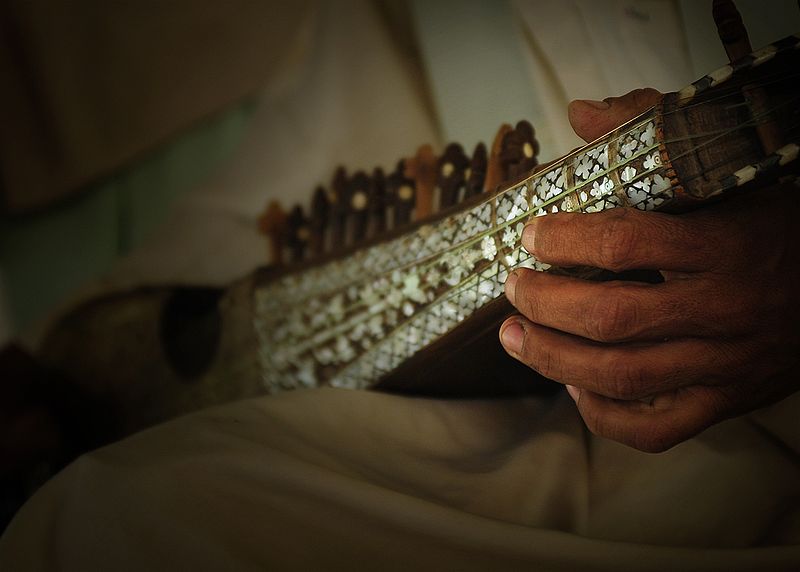 |
| A rubab. Photo via Wikipedia Commons |
The current generation of musicians in Pakistan has a heavy
contention between the sounds of the rubab and the guitar. To musicians like
Bogra, the rubab is an important part of his musical history, and the sounds of
his culture.
Khumariyaan,
which means “the intoxicants,” fosters a sound of past and present influences
with performances that delight people throughout Pakistan. The band is
comprised of four musicians: Fahran Bogra rubab player, Shiraz Khan
percussionist, Aamer Shafiq vocalist and guitarist, and Sparlay Rawail
guitarist and percussionist, were students from two universities in Peshawar
and came together for their love of music.
Each musician brings their own story
to the band, and adapts sounds from their travels throughout Pakistan, thus
creating a truly unique sound.
One of the features that separate Khumariyaan
from other groups is their pure use of instruments with little to no lyrics.
Instead, the group focuses on creating an instrumental experience for their listeners
to get out of their seats to move to the sounds of contemporary instrument
fusion.
The
band prides their band on creating an experience for their listeners. “… We
bring hyper percussive folk music from the ruins of Pakistan, in an age where
there is a song for selling juice boxes to match boxes to shampoos, the folk
artists and particularly instrument players, who in fact are the real
composers, are suffering, and we believe, it is important for the evolution of
folk music to blend it with a contemporary style of guitars and percussion.
Folk music is always traditionally listened to live, and we work intensely on
perfecting our live act, this is our way of thinking and this is what sets us
apart,” said Bogra.
No comments:
Post a Comment