By: Leisha Lininger Produced and edited by: Leisha Lininger Home to the largest slums of Asia, the Republic of India boasts a 9.8%
poverty rate with 29.8% of the population living below the poverty line.
However, students in Columbus, Ohio, are determined to make a difference. Thus,
with the formation of the Columbus chapter of the non-profit Association for
India’s Development (AID), poverty meets a formidable foe.
According to their website, “AID is a non-profit, volunteer movement that
supports grassroots organizations in India and initiates efforts in various
interconnected spheres such as education, livelihoods, natural resources,
agriculture, health, women's empowerment and social justice.” With meetings hosted on Ohio State’s campus, interested community members
and students alike unite to brainstorm fundraising ideas and solutions for
specific issues in India.
“We meet every Friday at 7pm at Lazenby Hall. We always have a core group of
10-15 people,” said Aparna Lakshmanan, a student of the Ohio State University.
“There are people from the community in the core group as well as
undergraduates and faculty.”
Led by Lakshmanan and Rohan Mishra, the group’s aim is to address the root
cause of issues, rather than simply treating the symptoms.
“We, at AID Columbus, believe that small initiatives such as the projects we
support help shape the future of our nation.”
With over 70 chapters of AID active
worldwide, especially in the United States and in India, the divisions tend to
meet weekly or monthly to identify issues in specific regions and think of
ideas of how to alleviate those issues.
The amount approved is equal to about $4093.36 in U.S. dollars (as of
November 2012 currency conversion rates).
In addition, the group is working on
six issues, described further in detail in sidebar 1.1 and has identified
solutions for each one, some of which involve education, and others which
involve political and legal action against the government or in enforcing laws.
This project also has the support of the Boston and the Johns Hopkins University chapters.
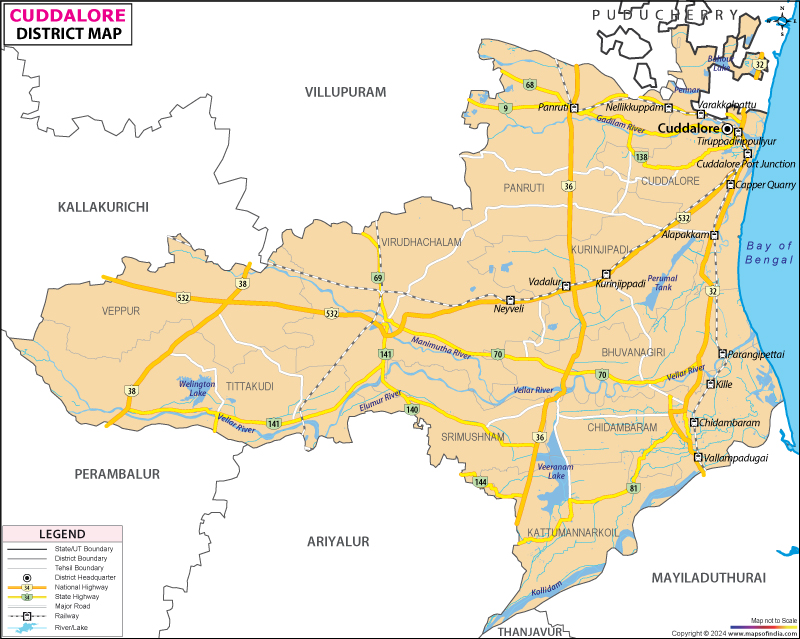
Other projects sponsored by the Columbus chapter also include Community
Environmental Health Monitoring in Cuddalore and Tamilnadu with the SIPCOT NGO.
The AID chapter in Boston also sponsors this project.
This project focuses on the five main values that comprise a successful
community monitoring system. They entail providing environmental & health
monitoring skills, building awareness and mobilizing support, creating an
emergency response team with the region’s youth, establishing an emergency
relief fun, and creating a clean livelihoods program via modes such as
“environmentally sustainable livelihood[s]."
Another project includes the Sangtin Kisaan Mazdoor Sanghatan 2011 Project
with the SKMS NGO in the Uttar Pradesh. In addition, the RTI program mentioned
above is located in the Rajasthan region and is partnered with students at the
University of Rajasthan. All of these programs focus on building community
empowerment.
Coordinated by Mr. Kamal and Mr. Tejaram, the Right to Information Manch
project focuses on “improving government accountability and advising people on the opportunities and facilities that
are available to them via the government,” according to the 2011 RTI Manch
report.
“RTI requires timely responses to citizens
requesting for information about government authorities. NREGA guarantees 100
days of employment yearly to a rural household in the form of manual labour.”
The group has been involved in serving as a
watchdog and investigator of the government, and discovered that Rs 40 lakh was
misused in a public hearing hosted in fall of 2011 for villagers who needed
compact fluorescent lights,
according to the 2011 Manthan project report, located on the AID homepage for
RTI Manch: Awareness Generation and Facilitation of RTI and NREGA.
Yet another project sponsored by the Columbus
chapter focuses on creating a short-stayshelter for Women, according to the
July 2012 meeting minutes. The history of the shelter indicates that it was
approved in 2010, but faced delays due to Fair Credit Reporting Act clearance
requirements that were unmet.
The following year, however, it gained
monetary support of $2,000. The organization’s aims are to expose female
infanticide, support the education access for female student dropouts, and
assist rape victims.
At
this hearing hosted in November 2011, a scam involving Rs 40 lakhs (4
million) was exposed and families living below the poverty line in India
received compact fluorescent lights. (Photo
courtesy of Mohan Singh, one of four fellows at RTI Manch) (Academic Fair Use)
AID receives its funding from a variety of
sources, such as grants, and donations. One staple, however, is its hot dog
sale.
“We’ve been doing that for more than a
decade,” said Lakshmanan. “[For about] fifteen years or more now at the
Ohio State University at the football games. It’s a really well-organized
system by the university.” In order to obtain permission to sell dogs for
development, the chapter must sign a contract with the university.
The group is always looking for new members and for fresh ideas of funding.
If you are interested in joining or in donating, check out their weekly
meetings in Lazenby Hall 002, located at 1827 Neil Avenue Mall or check them
out online at columbus.aidinidia.org.
The Association for India’s
Development is a 501(C)(3) (Federal Tax-ID 04-3652609) non-profit charitable
organization. All donations to AID are tax-exempt.
Boston’s Amit Soni and Columbus,
Ohio’s Preethi Jyothi contributed to this report.
Have you ever ridden your bicycle on a park’s bike path? It’s probable that one or more people are living in a makeshift shelter or tent inside the woods along side the bike path.
Have you driven over a bridge? There could be someone living underneath.
Notice empty beer bottles, bags, or shopping carts in an area? It’s likely that homeless people panhandle in the area.
Results from Ohio’s 2008 Point and Time Count show that over 12,000 Ohioans were homeless during a single 24 period. Many of these people reside in shelters—places like the YMCA, Open Shelter or ministries.Others are unsheltered. Due to their sometimes-remote locations, they’re often unnoticed by the average person.
In hopes of gaining a better understanding of the conditions that thousands of Ohioans live in and to learn about how they ended up in their situation, I spent three days interacting with the homeless in the area.
Since some homeless individuals are mentally unstable, substance abusers, or live in unsafe areas of town, I did not go on my journey alone. I was accompanied by Maryhaven Engagement Center’s Brian Hall. Brian is an outreach coordinator for the homeless. He locates those living on the land and interacts to help them find better living alternatives.
Day One:
We first drove through an abandoned parking lot towards woods behind a building. Brian and I went to assess the situation before bringing my video camera, as we did not want to frighten or intimidate anyone.
We lifted up branches and created our own path to get through the woods. We finally found the homeless person’s shack. It was a one-room shelter that appeared to be made of plywood. Empty beer cans and trash surrounded the structure and a knife was stabbed into the ground.
Brian had been there before and knew the person who lived there by name. No one was outside when he got there, so Brian yelled, “This is Brian Hall with Outreach. Anyone home?” An angry man came outside and screamed, “GO AWAY! GO AWAY!” Brian asked the man if he needed any blankets or food. The man slammed his door shut. We left.
This was my first indication that some homeless people do not want the help from others and that some people are more assertive or angry than others. After leaving this location, Brian explained to me that the man’s reaction was not unusual.
"What is most disturbing for me is to see people decide they don’t want the help at that particular time. But we’re not satisfied with that. We continue to engage people. That’s our job,” Brian said.
Our next stop was in a similar location as the last. A person lived in a patch of trees behind a building in a one-room shelter. His “yard” was a lot cleaner than the first person’s.
This man’s name was Jim Mills.The shelter, which he said he built himself, was made out of wood, siding, tarp and a screen material. He used to have a neighbor, who lived in a similar shack, but the person doesn’t live there anymore. Jim said that he built his shack on private property and is not supposed to be there.
Jim was very quiet, but a nice and friendly guy. He used to live in another campsite and also lived in the YMCA for six months. He gets his food from church groups and food pantries. He has no stable income, but finds temporary work when he can.
“Oh, I can do all kinds of things. Concrete, dry wall, siding,” Jim said.
He was kind enough to give me a short tour of his home. Watch the video below to meet Jim and see the tour of his shack.
We left Jim’s home and drove towards Confluence Park in downtown Columbus. Once we were near the park, Brian drove his car onto a bike path. This was surprising.
I asked him where he was going and if he was authorized to drive on the bike path. He explained that many homeless people live inside of the trees along the bike path. Because of the nature of his job, the police allow him to drive in locations that the average person cannot.
We stopped in the middle of the bike path and walked through the woods. A person’s tent was next to a river. I asked the man who lived there if I could talk to him about his life and how he ended up in his current situation. He was very apprehensive to speak to me. He agreed to talk if I did not show him of video or disclose his full name. His first name is Aaron.
Perhaps what was most fascinating about Aaron was his life before becoming homeless. He went to college at The Ohio State University and graduated with a bachelor’s degree in accounting. He held several reputable jobs, was married, and owned a home. He said that he lost his job, had no back up plan and consequently lost his house and everything else he owned. Now he lives by himself in a tent.
He told me that one of the greatest challenges that he faces is the weather.
“When it’s lightening out here, you really shouldn’t be out here with all these tall objects around here...but there’s not much you can do,” Aaron said.
Day Two:
We started off the day walking through another wooded area to get to Israel Dominick’s tent.
Watch this video to see the path we took to reach Israel’s location. NOTE: the playback speed of this video has been increased.
Israel has lived in the same location for three years.
The area is very quiet and peaceful. His tent is covered with a clear tarp and sticks. He explained that wild animals—especially raccoons are a big problem for him.
Israel said that he has no income and has never had a job. He said that he shovels driveways in the winter for free.He hopes to get out of his current situation, so Brian talked to him about finding an apartment.
After leaving Israel’s, we spotted some panhandlers sitting next to a building in Columbus. About five people gathered in the area, only one was female.From my observation, most were drunk. I spoke to the oldest man in the crowd. His name was Kenneth Page. Kenneth has been homeless for seven years. He used to have a job, a home and was married, but lost everything after he went to prison for assault. He has no shelter to sleep under.
He doesn’t want a job, because he makes 50 to 60 dollars a day holding a sign. He calls this flying.He says that he gets drunk every day and has no plans to get out of his current situation.
Day Three:
Across from a library in Reynoldsburg, Ohio in a patch of trees behind a Carpet Cleaning Company business, a homeless man lives in a tent. This was one of the most industrial and functional setups that I saw while exploring different living situations.
The individual had built cabinets on trees, used tree branches as a place to hang clothes hangers, and probably had more cleaning supplies than I have in my own home. The man was not there when Brian and I arrived, but Brian had interacted with him many times before. Apparently, the man is very reclusive and spends each day at the library where he reads.He has no plans to move into an apartment.
View the slideshow below to see pictures of his campsite.
The next place we visited was the most fascinating. We stopped the car on a bridge off the freeway and got out of the car. We ventured underneath the bridge, which was located next to a golf course.
My jaw dropped as soon as I stepped underneath the bridge. Each structural column underneath appeared to have a different residence inside. There were four or five cubbyholes that had mattresses, blankets, dirty clothes, and trash inside each one. There was a very intense odor of urine and feces.
I was kind of frightened at first, because from the angle that we were standing, we could not tell if anyone was there. Brian yelled, “Is anyone here?” and no one responded. Because we couldn’t see anyone, we walked further underneath. I wanted to capture footage of the situation, so I went down the slope—next to the river.
I looked up from below and noticed a man sitting in a chair in one of the cubbyholes. He sat still and said nothing—just stared at me. I tapped Brian’s shoulder, as he had not yet noticed the man. My heart pounded, while waiting to see how the man would react to our presence. Brian walked towards him and began to engage in conversation.
The man, who did not disclose his identity, agreed to talk to me. He lives under the bridge with about four or five others. He has two children and is struggling to pay child support. He is an ex-convict and therefore cannot secure a job. He gets everything that he needs—including food—from dumpsters. He said he keeps up with the outside world using his small handheld radio, but often cannot afford batteries. He bathes in the muddy river or goes up to a nearby laundry mat to use their sink.
The conditions under the bridge were terrible. In another cubbyhole, someone was using a old seat from a car as a couch. View a slideshow of pictures below.
Following our experience underneath the bridge, we drove to another wooded area next to railroad tracks. We followed holes in the ground--which served as steps--up a mound. We were then greeted by Mike. Mike is a homeless man who lives in a one-room shack on property owned by the state of Ohio. Immediately after our arrival and after he understood that he would be on camera, he got out his "Pledge" dusting spray and began cleaning the coffee table inside his shelter.
His shelter is made of wood, fences, tarp, and other materials. He built it himself and even painted the wood blue. Here's a picture below.
Compared to the living conditions underneath the bridge, Mike's home and yard were immaculate. Behind the shelter were lawn chairs and a make-shift grill. In front of the shelter, a large American flag blew in the wind. He had a bed and night stand inside. A picture of a model hung on his wall.
Mike said that he is unemployed, but formally built residential homes and mansions for others. He has no source of income, but isn't looking for a job either. He said that he's content in his current situation. He was very talkative and friendly. He even asked Brian and I to come back sometime for a meal and soft drink--welcoming us as if we were lifelong friends! I asked him if he ever gets lonely. He said the birds are his company.
In MEXICO.
In Columbus, the living conditions of the homeless that I met were vast. Some lived on the streets, others in makeshift shelters, and some in tents. Some of these conditions were better than others.Yet, all of these people were still considered homeless.
In other parts of the world—like Mexico—entire families live in comparable shelters to those that I saw in Columbus. The difference is—these people aren’t considered homeless, they’re considered poor.
I spoke to Jason Barger about the different standard of living in Mexico. Barger has spent much time building homes for the poor in Tijuana, Mexico and also started a project to assist the unsheltered homeless in Columbus.
“What you find [in Mexico] are people crowded together in these shantytowns. Nine, ten people living in a rotted, leaned to, self-made wooden structure in the dirt that may only be 8 feet by 8 feet or 10 feet by 10 feet,” Barger said.
Amor Ministries, a non-profit Christian ministry based in California, mobilizes volunteers to build new homes for many in this situation. Amor has built nearly 16,000 homes since 1980. Each house is 22 by 11 feet. But Barger said that even the new homes built by Amor might not be considered homes in the United States.
“Within our North American brains, if you were to see a picture of the houses we build, you may have that first reaction—that’s not a house, it looks more like a garage. But really when you put that next to what they used to have, we’re giving them a space that’s twice as big—or even three times as big as what they used to have,” he said.
Katie Haar, communications coordinator at Amor Ministries, explained that the families in Mexico who receive a new home must own their land.
“We don’t consider them homeless. They have a shelter and they have a place that they can call their own, but their housing is far from adequate. The places are usually made out of scraps that they are able to collect or things that have been given to them—old garage doors, tires stacked up, all sorts of things—even tents with tarps,” she said.
Haar’s description of the housing arrangements for the poor in Mexico seem nearly identical to that of Jim, Israel and others that I interacted with in Columbus.Haar acknowledged that the situation in Tijuana is comparable to the “homeless” situation in the Untied States and attributes the different standard of living to the “American dream.”
“Everyone wants to have a house and a car and a white picket fence. Less than that is put on a ranking scale. We sometimes have the mentality that ‘Oh, that’ll do for the people in Mexico because it’s Mexico or South Africa or any developing country.’ It’s like things aren’t acceptable for America, but its okay for a country that’s developing,” Haar said.
Samuel Gonzalez, who works at an orphanage in Tijuana, said that he considers “homeless” people to be those in Mexico who sleep on the streets, steal food and steal copper to make money. He agreed with Barger and Haar about the status of those who live in man-made shelters or tents.
“Here [in Mexico] they’re just considered poor. You see a lot of good people, you know. A lot of people haven’t had a break. They have children, they have kids, and mom and dad are there. It’s usually a complete family—that’s why we don’t consider them homeless.”
View pictures before and after the homes were built. (Photos courtesy of Amor Ministries)
Young African Leaders' Initiative Connect Camps Underway in sub-Saharan Africa
The purpose of the Young African Leaders Initiative (YALI) Connect Camps is to invest in the next generation of African leaders through intensive executive leadership training, networking, and skills building, which will prepare them to make social change in their communities. The core Ohio University team working jointly with The Collaboratory at the U.S. Department of States Bureau of Educational and Cultural Affairs has designed a program for the YALI participants called Connect Camps taking place in sub-Saharan Africa to pursue the following goals:
1) Give up to 160 young African leaders the opportunity to collaborate, learn, and network with U.S. and African resource experts and with each other during the eight YALI Connect Camps; to develop innovation strategies that build on their professional skills, engage in hands-on experience with low-bandwidth technologies, conduct community outreach, and buildtheir capacity through mentoring, networking, and using strategic civic leadership for social change.
2) Use a stimulating canvas model of leadership to develop skills in entrepreneurship and creating social change by engaging in five-days of facilitated interactive sub-group workshops, and fostering mentorship relationships between the Mandela WashingtonFellow alumni and their chosen mentees for the Camp.
3) Demonstrate some community-oriented enterprises using applied technology that supports innovation and collaboration in community development and entrepreneurship, civic leadership, and public management.
4) Develop leadership skills among delegates through mentoring relationships, between themselves, as well as with American and African facilitators.
5) Provide participants with opportunities for face-to-face networking and to facilitate a collaborative, innovative project or projects that further YALI goals.
Various U.S. Embassies in Africa have been instrumental in the selection and coordination of hosting the Connect Camps. The YALI Connect Camps are funded by a grant from the U.S. Department of States Bureau of Educational & Cultural Affairs and administered by the Institute for International Journalism (IIJ) at Ohio University.