By: Leisha Lininger
Produced & edited by: Molly Nocheck
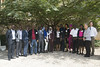
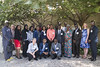
Nestled in the Maharashtra district of India, Aruna of Oasis seeks to rehabilitate and free women from the bondage of sexual slavery and give them new skills so that they can leave the practice of selling their bodies. Director Sachin Kamble coordinates services for not only the women of the brothels, but also for the children of the women in the Red Light District. Volunteers come from all over the world to offer their time to these individuals and to open their minds to new cultural experiences.
Departing from their hotel, these volunteers travel via train and then they finally enter the hustle and bustle of the heart of Mumbai, just blocks away from the nationally known Red Light District. Weaving through food stands and vendors calling out for buyers, between cars angrily and incessantly honking while simultaneously braking and speeding, one follows the guide. With all the senses assaulted by the sounds of the horns, the stench of the trash, and the never-ending presence of the heats, the guide ambles on, leading the group to their destination: a non-governmental organization that works with the women in the brothels. The day is Tuesday, the day when women come over to gather for training, counseling, medical attention, and just to get a chance to leave the brothels for an hour or two.
Oasis is an international non-governmental organization (NGO) that boasts branches not only in India but also in the United Kingdom, Bangledash, and around the world. According to the Oasis global website, their mission is as follows: “We're involved in anti-trafficking work, community development, housing, education, water... wherever we go we seek to extend the opportunities that we ourselves are so privileged to have.”

Sabina Kapur* speaks only Hindi and has two young children at home. Even though she does not like selling her body, she depends on the trade in order to provide for her young children. Even though she lives a life of hardship, she still delights in bringing a smile to others’ faces. Looking into the eyes of her visitors, the volunteers, she smiles and intently compliments them with phrases such as “Bahuth sunder hay,” translated, as “You are beautiful.” Her selflessness is evident in all that she does, even in a system that has taken away her freedom and away from her family.
Dimple Patel* has successfully left behind her life in the brothel system, and now volunteers with Aruna to encourage the other women and bring them out of the system. Patel helps host the weekly meeting, which entails a support group for those who have been diagnosed with AIDS.
During the support group, Shraddha Shelke, a longtime faithful employee of Aruna, gathers the women in a circle on the floor. Speaking in the mother tongue of India, Hindi, she explains how AIDS affects one’s body and charts the effects through pictures. Somber, the women listen intently. They are not alone in their struggle.
In a study written by R.D. Fowler in 2005, the Human Rights Watch reports that “more than 50% of Bombay's prostitutes are infected with HIV, with India's red-light districts the primary vector of viral spread into the general population.” Based on the number of clients that utilize the services provided in the Red Light District on a daily basis, the watch estimates that hundreds of people are infected daily with HIV, with 160 million Indians infected and the death toll 10,000 per month by 2000.
Showing posts with label Mumbai. Show all posts
Showing posts with label Mumbai. Show all posts
Thursday, October 25, 2012
NGO Roles in Rehabilitating Women in India’s Red Light District

Students are doing their part to give back and reform India. Some students have humanitarian ideals, and even reach out to their community by volunteering via other NGOs, such as education-focused Vision Rescue or the Asian Slums’ Reality Gives NGO.
Student Smruti Gaddamwar saw a bus traveling by her neighborhood on its ways to the slums of Asia to provide schooling and a meal to children, and wanted to join them. The bus is part of Vision Rescue, and Smruti spends one day a week traveling with the bus, playing with the children and helping to serve the food.
“I believe in helping others and in helping India,” she said.
Even despite the varying perspectives on NGOs, the staff that works there believe strongly in what they do. The employees and local volunteers spend their time helping to interpret conversation between the local women and the international volunteers.
Rafique Shake is a man who calls himself a “born-again Christian” and embraces the scorn that his wife and family have placed on him for spending time working at Aruna. Even Johan Singh, a former soccer fanatic, now spends his life working full-time to love, care for, and teach the children of Aruna Kids, located in the heart of the Red Light District. Each of these individuals shows how they are making a difference and creating an impact in their community.
University of Michigan junior Chithra Rajasekaran, left her homeland of Bangalore at age of eight for the United States, returning to India to volunteer over the years.
“[Volunteering at] Aruna Kids was really hard for me,” said Rajesakarn. “Having them go back to their life, I felt kind of hopeless. I am thankful for Aruna, though, because it does give me a little bit of hope. It shows me that not all Christians are apathetic, and some are trying to do something to help. There isn’t going to be one magical fix, there isn’t going to be one organization that fixes everything. It’s going to take a lot of trial and error.”

Monday, December 20, 2010
Mumbai: A City of Extremes
By Rachel Ferchak, SUSI web manager
Immediately after I stepped off Lufthansa Flight 934 at midnight, the murky humidity hit me like a stone wall. That same humidity was incessant the entire week I was in Mumbai, India.
My first impressions of the city were those seen through the dusty windows of a 1970s bus, which took our group of Ohio University students an hour away to our clean, air-conditioned hostel in Mumbai Central.On the rickety bus ride through the city, we passed homes with tin roofs and walls made of billboard signs. There were families sleeping on concrete sidewalks with their only extra clothes hanging on thin lines of rope.

After nearly 24 hours of travel, we had finally arrived.
Culture Shock
Mumbai is a city with two different worlds: extreme wealth and abject poverty. On one hand, it is home to the glitz and glamour of Bollywood. But on the other, Mumbai has nearly 1.2 million people living on 20 rupees per day, or less than 50 cents, according to The Times of India.
Many Americans don’t see the side of poverty that I witnessed in Mumbai. Everyday, I watched children playing in the chaotic streets, children who were dressed in outgrown, filthy T-shirts and shorts. Dirt and dust were the only things covering their delicate feet. Young children carried their infant siblings.
Many Americans don’t see the side of poverty that I witnessed in Mumbai. Everyday, I watched children playing in the chaotic streets, children who were dressed in outgrown, filthy T-shirts and shorts. Dirt and dust were the only things covering their delicate feet. Young children carried their infant siblings.
Everywhere I went, children held out their hands asking for money. The only English words they knew were “food” and “money.” Although we were told not to give the children money, we were told to treat them like children. We crouched to their level and asked them, “Aapka naam kya hai?” or “What is your name?” in Hindi.
The children would immediately respond by putting their hands down. Their faces lit up as they gave their names. Then, I would open a bag of Chickadees cheddar snack crackers and give it to them. And, usually, they smiled and walked away.
 Nearly half of Mumbai’s estimated 20 million people live in slums or shantytowns. Entire families live in 9-by-9 spaces, which function as the kitchen, bedroom and living room. In terms of material possessions, these people have virtually northing. But, they do have community. They depend solely on each other for love and support, and they can relate to one another.
One evening, I walked through an alley by our hostel. Shanties aligned either side of the street. As I wandered down the street, families gathered for their evening meals, and children ran around playing with the other neighbor children. On a single mattress without shelter, one young woman read to her sleepy infant. A grandmother, mother and two children slept outdoors on a cot. It’s almost as if the people in the shantytown are tucked away in a completely different world. Upon exiting the street, sure enough, there stood the main road with an illuminated McDonald’s and three-story shopping mall.

In India, it seems as though everything has a zip to it: omelets, plain rice, McDonald’s sandwiches, you name it. But one thing I found particularly odd was the masala soda and masala spice chai. Masala is generally a mix of cardamom, cloves, cinnamon, and black pepper. So, I’m pretty sure you can imagine what masala soda would taste like. Many of us tasted the beverage, and we all had similar facial reactions. Our faces puckered up, and we struggled to swallow. The drink resembled carbonated salt water. One sip was enough for me.
Although many of the others on my trip were craving pizza by the end of our week, the food was one of the things I enjoyed most about India. But I tend to like strong flavors and spices. I’ve heard that most international food served in America is completely different from the native cuisine, but I did not sense much of a difference between American-Indian food and authentic Indian cuisine.
Because of religious restrictions, India is a vegetarian’s paradise. Restaurants are labeled either “veg” or “non-veg.” Even if the restaurant is “non-veg,” rest assured that there is always a vegetarian option. For example, I sampled the mildly spicy, lightly fried McVeggie at McDonald’s. Or at Kentucky Fried Chicken, the menu includes options such as the Veg Zinger, Veggie Snacker and Veg Rice and Strips.
A Change of Heart
Nervously, I followed a group of four women through narrow, damp alleys. Where am I? Fear and confusion started to set in. Those feelings increased with every step. The men who passed me stared, and I felt uneasy.
I was told prior to this walk, that I was going into one of the darkest areas of the city. And I sensed the weight of that darkness.
Ten minutes later, I, along with three other women from OU and four Indian women from the Mumbai Aruna Project, arrived at a run-down, four-story building. We walked through the doorway and could see nothing. My heart pounded. Our eyes struggled to adjust as we staggered up the filth-covered staircase. Then, finally, sunlight appeared from a room at the top of the steps.
The Indian women instructed us to take off our shoes, enter the illuminated room and sit on the large couch. We obeyed.
As we entered, ten Indian women — all of whom were between 14 and 25 years old — sat on the couches laughing, putting on makeup and styling their beautiful black hair. They are my age. My age.
With the help of the women with the Aruna Project, we were able to converse and interact with the girls. Their eyes sparkled as they laughed. But we knew that behind those young faces, there was something different about their lives. Something we, as American women, could not understand.
After saying our goodbyes, we entered another room. And that is where my heart sank. The girls in this room told us they were 15 years old, but they were obviously closer to 10. I can still see the face of one child with round glasses and pigtails. She could not have been older than nine. How could anyone do this to his or her child? I thought. Each of these girls sees an average of seven men every night. Prostitution is the only life they know.
__
The majority of the women were sold into the slave trade by family members when they were between the ages of 7 and 11. These 40,000 women are forced to attend to the more than 300,000 men who go to the brothels every night.
The sexual slave trade is like a cell, the women at the Aruna Project told us. (Many of the women who work at the Aruna Project were once prostitutes, and they can speak from experience.) When these little girls first enter the brothels, they are kept in chains and not allowed to see the sunlight for a few years. During those years, the girls are psychologically and physically abused. They are beaten down so that when they are finally released from the chains, they will not want to leave. As the girls get older, they are given more “freedom,” but if they go outside the brothel, they are accompanied by a pimp. Eventually, they are allowed to travel by themselves; however, they must pay.
We often wonder, Why don’t they just run away? As a part of the psychological abuse, the women begin to believe that the life of prostitution and sexual abuse is better than life on the streets. To those women, life on the street means having no food, shelter or money, all while still being sexually abused.
But there is hope: the Aruna Project.
The Aruna Project is a Christian organization dedicated to the rescuing of women and children from the sexual slave trade. Because of the years of abuse these women endure, the Aruna Project must build relationships and trust with them. The Project offers counseling, health care and skills training so the women will be able to function independently in society. Since the organization started nearly ten years ago, it has rescued more than 150 women.
The Project not only rescues women, but it also reaches out to their children. Aruna has a partnership with the Salvation Army, which provides a home and schooling for the children of prostitutes. I had the chance to visit the Salvation Army and play with the children, ages five through 14, who study the core subjects, as well as English and the Bible. It warms my heart to know that these children are the future. Let’s just say that that was the best way to spend my last day in India, with hope.
Subscribe to:
Posts (Atom)