Monday, August 5, 2013

Media owners of different countries


By Gunjidmaa Gongor (Mongolia)

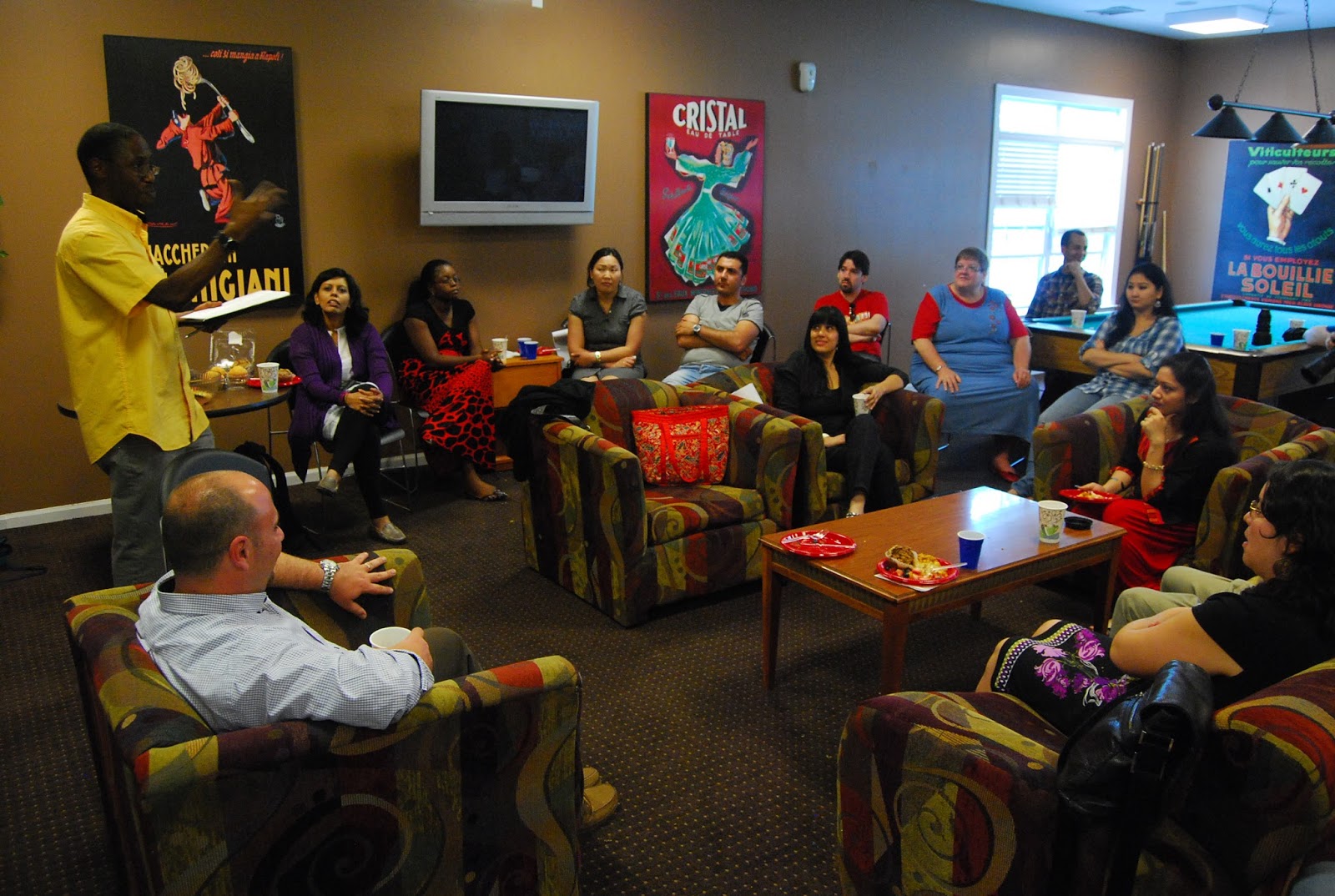
Study of the United States Institute (SUSI) program let me learn about media systems and policies of 15 countries represented here. At here were sixteen different countries’ scholars introduce their own countries media system, journalism practice, political culture and media policies including 45 minutes for SUSI members and international students. That time is good discussion, debate, sharing knowledge and strong questions/answers.    

Anand Pradhan, SUSI scholar from India, he tweeted that “Intelligent and Beautiful media scholars from Zambia, Zimbabwe, Mongolia, Malaysia, Kyrgyzstan, Ecuador, Honduras and Bangladesh” and “Smart SUSI Media scholars from Nepal, Ukraine, Romania, Me from India, Mozambique, Lebanon and Uzbekistan in different moods”.

 https://fbcdn-sphotos-h-a.akamaihd.net/hphotos-ak-ash3/946338_10151722989096749_277678352_n.jpg

It was really useful information to know about abroad countries’ political, social, economic culture and also opened my eyes on the world media development. According to these presentations, most of countries have faced same problems and challenges which are political subsidies, unprofessional journalism, editorial independence, gap between rural and urban media development and lack of media market principles etc.  

Its main reason is politicians huge invest into the media sector with the goal to manipulate the public and to support their pursuit of power. For example, Chilean media is a huge concentration – currently two media groups are main role playing in their media market. Zambian newspapers mixed private and state owned – TV stations all are owned by state. In 2012, the first private TV station was launched in Zimbabwe.  

SUSI scholar Yuri Zaliznyak reports that media ownership in Ukraine is concentrating around one big family and is primarily serving the interests of oligarchs. Therefore “the most of Romanian media is politically connected and media owners often run for office” said Dr. Antonio Momoc from Romania.    

“Malaysian mainstream media is nothing but mouthpiece of government” reports her presentation, scholar Sharon Wilson from Malaysia.    

https://sphotos-b.xx.fbcdn.net/hphotos-ash4/1005763_10151723053921749_843953503_n.jpg

 In my country, one of the biggest challenges in media market is the plethora of media outlets on such a small market can be explained by the fact that the majority of Mongolian media survives on political subsides rather than on market revenues. Around 70-80 percent of newspapers and televisions are owned by high ranking politicians. Another example is among the media, “gatekeeper contracts” are important sources of media revenue. The goal of the contract ensures that the media doesn’t publish about it when critical stories and controversial issues about any interest organizations.

Today we are all. We have a brain power and same interest to change the current media challenges. This is a good opportunity of the SUSI scholarship program.

Go head to professional journalism and good governance. We can do that together.       

Friendship forever? Or when it is too hard to say “good bye”.


Leaving my new family in US from 15 different countries, I haven’t managed to tell them how much I will miss them all, and how much I love them. I was asked to tell something before my long trip home, but couldn’t tell a word as the feelings were so strong and disappointment was so painful. I have never known that in a month you can really make friends and start trust and love people. 

Sitting in the plane, I started to think that we usually give people our lives and we trust them easily, but when it comes to real feelings we always turn on the logic. Why sitting in the plane, we easily give a pilot a chance to control our lives, we trust him and never doubt his capability to save our lives. Why we easily trust people in a restaurant giving us food, a doctor treating us? BUT we usually doubt people’s capability to love you and miss you after several weeks of real friendship, collaboration, sharing rooms, food, discussions, dreams and home and family melancholy?

We usually say that several weeks is not enough to learn each other and a tiny period to love and miss each other. But the life shows that friends you made in several weeks became the friends for life very often. 

I was blessed and fortunate so much that I met my new SUSI family members. Yes, all of them are very smart and intelligent but most important is that all of them have a big heart and clean soul. 

I learnt to be patient from my friend from Zambia, 
to be sincere from my friend from Honduras, 
to be musical from my Bangladeshi friend, 
to be thoughtful from my friend from Equator, 
to be responsive and helpful from my friend from Chili, 
to be discreet and sensible from my friend from Zimbabwe,
to be open as my friend from Mozambique,
to be generous as my friend from Lebanon,
to be gentle as my friend from Ukraine,
to be trustful as my Mongolian sister,
to be comical as my Nepali friend,
to be kind as my friend from Romania,
to be philosophic like my Indian friend,
to be delicate as my friend from Malaysia,
to be emotional as my friend from Azerbaijan.

I learnt a lot of life lessons. And if my philosophy about leadership is right, then you all, my friends, are true leaders as you all are good people.

I know the moment you go home will be not so happy, as you feel now. The moment you will say “good bye” each other will be difficult. You know that you will meet your family in the couple of weeks but you are not sure when the life will gather together all of us again. BUT IT WILL!

P.S Hope you learnt from me to be optimistic! Love you, all, my SUSI friends!


Saturday, August 3, 2013

Whatcha' gonna do when they come for you.

by Sharon Wilson (Malaysia)

For audiences in Malaysia, crime coverage in the United States is foretold by the fiction and reality of the many television programmes. ‘CSI’,’NCIS’, ‘Law and Order’ and ‘Cops.’ These  are amongst the many crime-cop shows which attract a multitude of viewers from around the world. The main players in the show ‘the good guys’ and the men who are suspects and those who are charged -  ‘the bad guys’ are highlighted with a great script, appealing characters and in some instances, fast camera work. This works because these types of television programming blurs the line between entertainment and fact.

 On a trip to San Fransisco and Atlanta, I was not enamoured by the tall buildings and the fancy stores but I was most excited about the sounds of sirens and the thought that the police are on the lookout for criminals and being a crime and media researcher and constantly surrounding myself with crime reporters and law enforcement, I knew something was going to be mentioned the next day about it in the local paper and that had me. To the point that an incident on 16th Mission street had me pulling out my camera and capturing a moment that I deem the real reality tv.
(Man gets pulled over by Atlanta cops, pix by Fernando A. Venegas Traba)
 
Most crime news sends out the message of blood and gore but the coverage of crime presents crime as an unfolding mystery story, beginning with the main players profiles after which the crime itself (typically murder), the investigations and finally the trial. These true crime stories are presented as dramatic entertainment. The crime drama fits the profile of being dramatic and lends itself to the replays of the gory details of the crime itself. Crime news is inherently dramatic but it is also the case that there are numerous tools used by journalists to create the sense of drama and concern. Crime stories often include powerful visuals, making them resonate in the culture because certain pictures have shared significance and invoke certain emotional responses.
 
Victims, culprits, uneasy scenes, gory pictures, but crime reporting does not stop here. Coverage of rape, murder and other violent crimes has been in our media for a very long time. Although what’s perceptibly different now is the positioning of this news in the past two decades, a new redefinition has risen about what is expected to be an important and suitable subject of discussion for the reporting of news. This change in culture which is tied to the general discussions about sex and violence has allowed the respectable media to report crime news which previously has been deemed taboo. Doing so has now made the reporting more detailed and gruesome.
 
In all forms of reporting, crime is an aspect which has least changed even though debates may have developed and continued from the change in news agenda. Nevertheless, there has not been a news editor who has challenged the importance of a great crime story when creating a list of news for the day and the logic of it is crime sells and there will be a need for crime research and a constant excitement for me.

Call and Post: Blood and tradition


By Fernando Venegas Traba (Chile)

One of the main things that the general public, and a pretty respectable amount of journalists thinks about our profession, is that we have to be objective. We should check the facts, organize the information and communicate it to the public. Well, I have never agreed with this point of view, don´t get me wrong, I believe that we must be accurate, that we must pursue the facts to built a good non-fiction narrative that gives an idea of what is going on in our societies, that we must contrast sources,but I don´t think that objectitivity is possible.

Basically because we are always making decisions, when we choose to cover this instead of that, when we choose to use a source over another one, when we took a photo, we use an adjective or even when we decide the headline, we are, at all time, using our own experience and subjectivity. 
This doesn´t mean that we are blind, or we are slaves of our own perceptions, what it means is that we are always, talking from somewhere, from our experience, culture, religion (or non religion), values and even political point of view. When we acknowladge this, we can start to compromise, to take a stand, not to lie, but to be real honest in our approach to reality.

Constance Harper (Associate Publisher/Editor)
This is what I saw in our visit to the Call & Post, a niche newspaper, founded in 1916 by the inventor Garret Morgan, centered in informing the black community of Cleveland, from a black community point of view, and they are blunt honestly in recognizing this.

As you may have deducted, by seeing the photographies and reading the texts at this blog, we are quite a colorful group, and in the day of our visit, the questions and subjects that we rise were pretty direct, most of them not very politically correct in a society like this one (U.S.), but importants and necesaries to understand the culture and the focus of this publication. Racial issues, editorial focus, salaries, subjectivity and objectivity were discuss by our group and a number of the staff at the Call & Post. It was at least refreshing to see the honesty and how up front they were with their answers. They declare themselves as a commit newspaper, interpreting the reality from an african american point of view, because it is necessary, because the history of the USA has been hard with the black community, and is part of their job to give voice and opinion to those, that in many times, has been abused or forgot by the goverment or the society.

Felicia Haney, Journalist C&P
It was really interesting, and certainlly makes sense that in a place like Cleveland, with a population integrated by a 51% african american, the Call & Post is a very important media. With a circulation of 20 thousand, this newspaper reviews al of the topics that this particular community needs to know, and also, the ones that they are interested in.

This paper is made of flesh and spirit, of real truth, not only the one supported by facts, but the one that is achieved when you are clear in your point of view, in your way to see the world. The Call & Post is ink and blood.


American model of media and journalism or why the "revolution" might not be televised


Living in USA within the last month made me realize how much we, Romanians, still have to do and to accomplish in order to become a modern country: infrastructure, health and education system, corruption are a few of the most urgent problems that we have to deal with in a more effective manner. The streets of San Francisco, the skyscrapers of Cleveland or Columbus, the airports of Atlanta or Chicago, the  facilities and investments made in education and science (that we all SUSI scholars shared at Ohio University) are among  the major differences between the two countries.

But there is something where we, as a country, can compare with the US: the freedom of speech and free media. Romania and USA shared the same position (nr. 47) regarding freedom of the press in the years 2011/2012, as shown in the Reporters without Borders Organization Report.

I could understand the influence of the American media system upon the Romanian media system only after I have watched and I have visited the national and local US media. For sure, Romania, an ex-communist country, does not have community journalism like in the US (see TV stations like KQED). But we do have the same business media model: rating points, target, market are the ones that dictate the editorial content, the prime-time news and agenda setting.

I was convinced about the resemblance between the two media systems after our visit to CNN Headquarters in Atlanta. In the same way like in USA, Romanian televisions may not cherish so much the public interest: the first and foremost important goal for TV News is to reach large audiences. That is why you may watch at CNN for three days in a row the British Royal baby story and, simultaneously, local or regional big political or social news can be ignored.

We have Romanian TV channels which share the Fox News editorial approach. You may find tabloids and gossip press, too. We have also journalists and TV stations that are trying to do an honest job. And the most important thing: we have the pressure of the media owners and their rush to get the profit, the advertising and more dollars.

American media system may not be the perfect one. Romania media system shares the same ultra liberal economic model of press. I do not say that it is the best possible, but so far this media system model was the only one that made possible the dialogue between different parts of society.

In the last years in Romania and USA large audiences shifted from traditional media to the online and to social media. Media consumption trends influenced the business model: While CNN has 2.500 employees at CNN Headquarter in Atlanta, Google has 11.000 employees at Googleplex in California. In Romania internet consumption became more important than print or radio consumption. These are, in fact, revolutionary changes in the media system! These are the reasons why I think it is time for traditional journalists and for media owners to work more responsibly to build their credibility in the name of public interest. If not, the revolution will not be televised.


Antonio Momoc

Every Coin has two sides by Shabnam Azim (Bangladesh)


SUSI is a platform from where we can exchange our knowledge, idea and culture .But suddenly SUSI became a magic mirror to me, by which one can see the true picture, facts behind the scene and the reflection of cruel realism.


16 St. Mission , San Francisco, is a journey of discover to a different America and i found my perception about United States lifestyle, law and order situation , manners and norms of civilization as not right. This is not only the land of peace and prosperity but also the land of instability and unrest also.
In that area I found lots of people who were homeless. In a trolley they put their everything and stayed beside the road or compound of the rail station. Their frustration about their lives were very clear on their faces. In dirty clothes and disgusting moods the people  seem to be in delirium.

 
At that place we (me, Sharon and Anand) met an architect (Janet Chapman) , who was very nice to us and suggested us to be careful. She made us aware that the area was not good, especially for foreigners and said “hide everything which is expensive and hold the bag carefully.” This made us really scared.

But that was not the end. Something more scaring was waiting for me. I went to a McDonald's restaurant to have some ice-cream. There I went to the ladies restroom and found a different culture.  A lady and a man were in one toilet and they were in a very compromising position. That time I just thought ,” Where am I? Is it called free society? Is it called civilized people?” this incident was really shocking for me.
That time I realized that every society has some problem.  In every country some people live under the poverty line and some are uncivilized and sometimes involve with crime.

Thank you SUSI for opening my eyes and make me realize the color of life and the frame of the culture in a true sense. And it proved again, every coin has two sides.   
 

The end of journalism? Think again!


I do not believe there is someone in this whole world who has never seen an American movie with heroes that are about to save the mankind from an imminent disaster. Hollywood writers imagined that apocalyptic scenario in different ways: the end of the world was to come either because of viruses and disease, or because of dramatic climate changes, to name a couple of them. But each time the ones who found the  solution for the crisis were the scientists. In the movies, the White House usually brings together an international team of scientists who come to a solution. The scientists and the American administration save the humankind once more and eradicate the danger.

This is the way I felt in the last 4 weeks of my life: as being part of something important and feeling that this is only the beginning. In the last month I was surrounded by very smart people from 15 countries: Azerbaijan, Bangladesh, Chile, Ecuador, Honduras, India, Kyrgyzstan, Lebanon, Malaysia, Mongolia, Mozambique, Nepal, Ukraine, Zambia and Zimbabwe. All these scholars are scientists, all of them are very bright in their work field. All of them have qualities, doubts, questions and answers. All of them have been chosen by the US Department of State out of the 100 scholars shortlisted from around the world. We all are called “SUSI people”, which stands for “Study of the U.S. Institute for Journalism and Media Scholar”.

The major difference between Hollywood scenarios and the Ohio University - E. W. Scripps School of Journalism reality is that the crisis situation we have to solve” is: the future of democracy and of journalism. The democratic model (for journalism and politics) is not imposed neither by the US Government, nor by the American scientists who are working with us. The model has to be generated by us.

Our mission: to take the US diversity back to our country. Our goal: to build an international network of scientists and researchers specialized in journalism and communication that will improve the quality of democracy and journalism in our own countries. Our philosophy: knowledge will diminish the discrepancies between countries and regions. Our challenge: to change the world for the better by teaching people to communicate and relate to each other the way we did within the SUSI program.

Antonio Momoc

Science of Universal and Scholastic Initiative (SUSI) by Shabnam Azmi (Bangladesh)

I Shabnam , from a country where everything is not such big as America. I am an assistant professor of University of Dhaka, Bangladesh. Our University called Oxford of the East and our central library is one of the biggest libraries in the south Asia. Now the DU central library has over six lac eighty thousand books and journals and around thirty thousand rare manuscripts. It is really very rich in terms of its resources.

But, the Alden library of Ohio University, Athens make me surprised. When I entered in the library for the first time , it was just “amazing” for me.to see their technological advancement I become speechless and when I started searching for the relevant documents for my research, I found a totally new, rich and vast world which is really unbelievable for me.

That time I was so happy, that I am so fortunate to be here and at the same time felt unhappy for my country, my nation and obviously for my students. Our people are very sharp and intelligent but they do not have the modern facilities. Sometimes they   have to read the book , which is destroyed by weevil. Even in my countries we have some meritorious students who  never watch television because there is no electricity or they do not have the capacity to buy a TV set. So to have an own computer and to have internet access for 24 hours is just a dream for most of the students.

By the way, I am thankful to SUSI to make me so fortunate. I will try my level best to gather knowledge and to enrich myself  to serve my nation. And I am grateful to SUSI, that SUSI gives us the chance to use their library resources  for two years from my home country. For me SUSI is not only the program of “Study of United States Institute” but also it is :

“S- Science of
U- Universal and
S- Scholastic
I-Initiative”.

Thursday, August 1, 2013

Building the Tower of Babel


By Fernando Venegas Traba (Chile)

Most of you remembers the story of the Tower of Babel. Is a passage of the Bible, specifically the Genesis. It´s about a group of people, of different parts of the World, that came together at Shinar after the Great Flood, and decided that they will build a Tower that will reach heaven, and around it they were going to establish a city that was going to be known everywhere. When God saw this, he punished the human for their presumptuosness by giving them different languages, wich lead to confussion and the eventual destruction of the edification.

Tower of Babel (Artist Unknown)
It is certain that is a metaphore for humility, but also we can associate it to science, and the pursue of knwoledge beyond religious or spiritual means. How a superior being is offended, and maybe a little afraid of the potential of this insignificant humans and their desire of power and wisdom. And his solution, miscommunication, "the langauge creates reality" saids the chilean Echeverría, when there is no language, there is no communication and everything falls apart.

Well, when we first arrived we had a welcome dinner for all of us, the SUSI scholars of Journalims and Media, at Ohio University; and I couldn´t stop thinking about this story, and how we are in the same path of this visionaries, but with a much better chance of succes.

Why you will ask. It´s simple, we are altogether in one place, from all over the world, reaching for knowledge, and specially for understanding. It was an amazing view, people of every latitude in one place, sharing, talking, eating (wich is always a common aspect between nations), laughing and sharing their experiencies, their vision, without any other goal than to know more about the other, more about life itself.

It´s only a matter of looking at the countries represented by the scholars, Azerbaijan, Zambia, Lebanon, Ukraine, Romania, Ecuador, Honduras, Mozambique, Zimbabwe, Malaysia, Kyrgyzstan, Nepal, India, Bangladesh, Mongolia and Chile. When I would ever dream to meet such a diverse group. But it doesn´t stop there, because between the faculty and staff of the program, we met persons from Zambia, Guyana, China, Rhuanda, the UK and Ethiopia, certainly I am leaving some countries behind.

Only in my table we had natives of two continentes, none of them from North America, actually there was one from Africa and four LatinAmerican. Two scholars (Beatriz Lovo and me), and three faculty members, Brook Hailu Beshah, borned in Ethiopia, and Patricia Cambridge with her husband Vibert Cambridge from the Guyana. At first it was a slow conversation, but after a few minutes we were very openly talking about different subjects, visions and ideas, with one common ground, the Journalism.

For me it has been an amazing experience, I have known people from all over the world and share with them ideas, discussions, memories and feelings,and that get me to my conclusion:

We are in an amazing position, and we have aqcuired a huge responsability. We can build the tower, and now there is no vengeful God that can stop us.