Friday night the July 10th 2015, was an exciting, chilly and at times happy encounter, hence the wrong turn.
We veered off the Route 33 East Bound, because looking at the time, we would have never made it on time to the Jazz Festival and be able to bring back the University Vehicle on time.
This agreed we searched for a way to turn back to Athens and the rain was not making it easy for us.
After an array of turns in what movie makers would call the wrong turn, we ultimately got into Route 33 West Bound and i can tell you that we passed a number of things. A cemetery is one, houses that looks deserted based on location, roads that are steep and dark.
But looking back, i remember that we even had cars that passed us at
some point and this is after we were saved by Mr. Bruce with his backup
for us to charge and reload Google maps.
Most of the
people in the Bus, were excited, especially with the police encounter,
the knocking on the window and the almost slow movement of the car. After all was done, we arrived safely at campus and what a feeling it was.
The Right Turn
On Google earth it shows that where we turned and just before parking, we should have done a 360 Degree turn into Route 33 West Bound .The Police came in handy as the car was apparently driving slow and escorted the crew.
It must be a part of some modernization theory
or the extent of a fairly structured participatory channel that gets a
number of us in this years SUSI 2015 to meet and express our own media
affinities on the backdrop of our own traditions.
Whatever you perceive it to be, this has
to be the greatest moment in all of our lives, having flown for hours
and ultimately graciously received by Dr. Yusuf Kalyango Jr., Ph.D, who has
made our own glee a pleasure to treasure.
Starting from Columbus to Ohio, though sometimes with bits of bumps here
and there, the 1 and half hour journey was sweet along with fruity
company and a delight of smiles from Program Assistants.What a reception indeed, not just of
people, the long tree filled hills and greenness amidst the rainy clouds
was just marvel, like an angelic movie.
The next 3 three days from arrival were
filled with a bit of too much to eat and little to cope with time
changes and sleep, but no one chose to oversleep. Sporadic visits with
glimpse of favourite squirrels to the beauty of the University, we could
not stop going either downtown to uptown, from class orientations,
restaurants, selfies and ultimately closing it with excellent braai by
Bob and Mary.
This couldn’t just end here as we
experienced the most sort after fireworks at NelsonVille County (
Thunder in the Valley Fireworks). The Program
Assistants spot-on with timely pickups and all, at the end e were now ready to start the hectic schedules.
....an expression for pure flawlessness you might say
as the dinner with Professors, Deans, Doctors and Staff at Ohio University was in their element to officially welcome #SUSI2015
Every moment every discussion, meaningful as we get close to the meat of things, by meeting our research partners.
Speaking to Lorna J Edmonds, (Vice Provost of Global Afairs, Ohio University). I tell her how she almost reduced med to tears by expressing @djcutrite's poem and making an analogy for the speech, i came to know also that it took her to heart. The appealing thing about the dinner was in that the evening was about SUSI 2015 Scholars and nothing was left to impress upon.
From the poem titled " Sundry Minds" to the escort of the Prime Minister ( below) , the team was ready for the start of the week.
Both lectures from Sara Namusoga, Uganda, and Betty Tsakarestou, Greece for the International Mass Media class are loaded with facts and figures about their media systems. For this short entry, we ask them to provide us with one thing they like and one thing they dislike about the media at home.
According to Namusoga, a current PhD fellow and a former editor of the Ugandan Parliament and various online newspapers, the most interesting thing about Ugandan media is the creative public communication channels, such as the Minibuzz.
On the other hand, she dislikes the government's hiding information from the people. (Click to hear her voice)
Professor Tsakarestou, a senior lecturer at Panteion University, also said that she dislikes the practice of censorship, plus the irresponsibility of the media, plus the lack of local perspective.
However, she is very much interested in the op-ed articles and the use of social media as alternative channels. (Click to hear her voice)
Following are some great moments during the two scholars' presentations.
Namusoga: License is required to practice journalism in Uganda. @scrippsiij#SUSI2015
Shwe Sin Khaing, from Myanmar, and Bruce Lui, from Hong Kong gave the very first SUSI lectures for the International Media Class on Tuesday afternoon, showing a lot of passions.
The audience, including SUSI fellows, were thrilled at their unfolding media situations in Myanmar (Burma) and Hong Kong, especially around censorship issues.
Khaing, who has been working in the field for 8 years, was worried but also excited about delivering the lecture for American students.
She was thankful for being encouraged to share the changes in her country's media system before and after the 2012 reform. (Click to hear her voice)
According to Khaing, the political culture in Myanmar has significantly changed after the reform, which steered the country towards a more democratic direction. As a consequence, the first real, independent journalism school was launched on May, 2014, called Myanmar Journalism Institute.
Bruce Lui transformed his academic lecture into a very thrilled speech about how Hong Kong journalists fought for the freedom of press. The experienced journalist unveiled many shocking, bloody events suppressed by the media due to direct commands from the authorities via media bosses.
Bruce said he believed journalists from different media systems can co-develop solutions for media issues which happened in each other's country.
(Click to hear his voice)
Surprisingly, many SUSI scholars are not comfortable in front of the camera, because they are more often behind it. Therefore, small talks become very good ice-breakers. Here we recall some very nice stories besides the official video shots.
Home-made food is the best!
After three days, Shwe Sin Khaing, from Burma, started craving for home-made food, especially rice. Luckily, she saw a post on Facebook showcasing food from SUSI fellow Kenneth Moeng (nickname Ken), from Botswana. He was actually making his awesome Spaghetti Ala Botswana.
Spaghetti Ala Botswana, a special dish made by Kenneth Moeng. Photo taken from his Facebook post.
Following a nice chat, Shwe Sin was invited to Apartment 607 for breakfast on the next day. This time, Govinda Pariyar, from Nepal, was the chef with his fantastic Khukura Ko Masu (Chicken Curry with Rice). "The food was so good. I am glad that they are cooking and inviting me for a meal," Khaing said.
Khaing also let us know that she had shopped enough groceries from Walmart to prepare a traditional fried rice dish. We believe that she would invite her fellows to try a taste very soon.
Similarly, Trung Bui, from Vietnam, has been very active in cooking for his roommates. He brought some instant noodles from home, and mixed it with vegetables, chickens and other ingredients in America. "It reminds me of my studying time in Russia. I cooked a lot," Bui said.
Other scholars who have planned to make food included Patricio Vasquez, from Chile. He told us that he was going to make Pineapple Pie for everyone to try.
Other food options for busy days
Half of the scholars would vote for a convenient, healthy diet with fresh fruits, yogurt, cheese, beans, and vegetables.
"I don't do cooking a lot," said professor Andrea Mino Viteri, from Ecuador. "I bought cereal bars, cheese, hams, some basic stuff for survival."
Sara Namusoga, from Uganda, had her first meal at Buffalo Wild Wing with a combo of mushroom and French fries. Not a big fan of meats, she went shopping for beans, veggies and cheese.
Greens was also the best option for Anna Lelik, a young journalism trainer from Kyrgyzstan. She had just had some salad for lunch before her video shooting schedule.
"I'm a big fan of hummus," she added. "In Kyrgyzstan, we have to prepare it ourselves, but here I can buy it at Walmart. It's kind of painful if I have to make hummus myself. The peas need up to 16 hours to absorb water before we can process it."
Coming from Athens, Greece, professor Betty Tsakarestou was not unfamiliar with American food. Coming to Athens, Ohio, she paid more attention to available healthy food options, especially organic foods, which is a "fast growing global movement."
Poetry night is up!
For Ken, Athens was such a muse. Creative works kept coming out of his mind, and he was really enthusiastic with having a poetry night in the upcoming days. Among his first poems was Sundry Minds. Click on the video to enjoy Ken's poem recited by himself.
Sundry Minds Bloom so bright and kind in the morning like Athens Through the day, silk into a colour of scent Like rain from the milky sky upon these giggles As sundry minds ponder the next drop.
Who is Who?
Just a few days, but SUSI scholars quickly recognized prominent features of their fellows. Professor Inna Sukhenko, from Ukraine, said she was very impressed by how fast roommate Andrea Mino Viteri can run.
"She makes everyone jog with her along the river, she always encourages us to do exercises," Sukhenko said.
Professor Viteri happily explained jogging would help a lot after days eating fast food like pizzas. "I'm surprised by the size of pizzas here. There are 16-piece pizza, and that's why we have to jog and gym," she said.
Professor Yan Lin would absolutely agree with her, because she also told us the size of food serving in America gave her an incentive to take a walk on the trail nearby.
Also, according to Sukhenko, Bruce Lui, from Hong Kong, was the one who can organize everyone, and Ken always made everyone laugh.
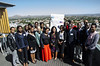
Fourteen young African leaders from six different countries have gathered here in Windhoek, Namibia to participate in the third and fourth YALI Connect Camps, funded by the Bureau of Educational and Cultural Affairs (ECA) in the U.S. Department of State and administered by the Institute for International Journalism.
The third Connect Camp is comprised of seven Mandela Washington Fellowship (MWF) Alumni and their mentees from Botswana, Ethiopia, Mozambique, Namibia, Swaziland and Zambia. The purpose of the Connect Camps is to invest in the next generation of African leaders through intensive executive leadership training, networking and skills building in order to prepare them to create social change in their respective communities by achieving the following goals:
Give up to 160 young African leaders the opportunity to collaborate, learn, and network with U.S. and African resource experts and with each other during the eight YALI Connect Camps; to develop innovation strategies that build on their professional skills, engage in hands-on experience with low-bandwidth technologies, conduct community outreach, and build their capacity through mentoring, networking, and using strategic civic leadership for social change.
Use a stimulating canvas model of leadership to develop skills in entrepreneurship and creating social change by engaging in five-days of facilitated interactive sub-group workshops, and fostering mentorship relationships between the Mandela Washington Fellow alumni and their chosen mentees for the Camp.
Demonstrate some community-oriented enterprises using applied technology that supports innovation and collaboration in community development and entrepreneurship, civic leadership, and public management.
Develop leadership skills among delegates through mentoring relationships, between themselves, as well as with American and African facilitators.
Provide participants with opportunities for face-to-face networking and to facilitate a collaborative, innovative project or projects that further YALI goals.
Unlike the YALI-MWF training programs, which take place at about 20 universities across the United States, the Connect Camps are being conducted as follow-on training workshops in four sub regions of sub-Saharan Africa. The first two camps were conducted in Dar Es Salaam, Tanzania in March, and the fifth and sixth camps will be in Cote d'Ivoire later this year.
From May 3-9, the third cohort of mentors and mentees invited to Namibia worked together to develop new social ventures using a comprehensive, iterative, one-page modeling tool based on the original "Lean Launch" business model canvas, and recrafted by camp facilitators as the "Venture Model Canvas." Camp participants used the poster-sized modeling tool to identify and hone their proposed new ventures value proposition for identified beneficiaries, to decide how the value was to be delivered and what was required for delivery. Participants also enumerated the fiscal, social and environmental costs, and benefits associated with the proposed venture.
The proposed ventures modeled during the camp encompassed a wide range of southern African start-ups:
"My Hostel, My Home, My Responsibility," a Namibia-based youth boarding school vandalism reduction program led by youth councils and geared toward reeducation and reintegration of vandals,
"The Green Machine," a mobile, youth-consciousness-raising program in a wheeled truck, traveling to Ethiopian primary schools with a program of competitive fun and education, all centered on recycling and greening the environment,
A university-based young women's engagement and empowerment entity working simultaneously in Swaziland, Namibia and Botswana,
A non-partisan Zambian consultancy focused on educating and engaging the electorate in the democratic process (initial emphasis on youth), and
A Botswanan youth employment service bringing together unemployed youth, educational institutions, and employers in an effort to improve needed skill sets to fill existing jobs in the modern workplace.
The participants practiced and presented pitches for the ventures to hypothetical new venture partners and funders. The audience for the final pitches included US Embassy representatives, an external evaluator, and local educators.
In addition to working with the Venture Model Canvas, participants also learned about community mapping through two representatives from the Humanitarian Open Street Map Team, Mikel Maron and Benson Wilder, visited Natures Way, a natural health clinic set up by a MWF, and a textile factory. A facilitator representing the Open Learning Exchange (OLE) from Ghana, West Africa, Kofi Essien, also presented to the group via Skype about his work with low-bandwidth technology in the education sector. Educators from Ohio University, Faith Knutsen and Judy Millesen, spent five days of the training with the participants facilitating on various topics including innovation and leadership for social change and much more.
The young professionals and future leaders have forged friendships across borders that will keep them together for years to come.
Romina Spina giving a lecture at the E.W. Scripps School of Journalism. Photo courtesy of Yusuf Kalyango
Visiting
international journalist, Romina
Spina, says she has found
many differences in the American journalism industry compared to her
experiences in Europe. Ms. Spina visited
Ohio University, courtesy of the Institute for International Journalism,
in late March to early April 2015. Spina is a fellow of the Transatlantic Media
Fellowship with the Center for Strategic and International Studies
(CSIS), which has given her an opportunity to visit over 25 cities in the United
States for three months. Along the way, she is researching journalism ethics
and the role of the public editor, or ombudsman, in a newsroom, as well as
globalization and economic development in the United States.
“It seemed like
the perfect opportunity to see places that typical journalists wouldn’t coming
to America,” Spina said. “It’s a different world with all walks of life.”
Spina is a freelance correspondent in Rome for a
Swiss daily newspaper known as Neue
Zürcher Zeitung, with a circulation of about
100,000 readers. About 10 percent of the population in Switzerland are of Italian decent. So, when a
position opened up for a freelance correspondent in Rome, she ceased the
opportunity. She covers business and politics as well as other interesting
events happening in Italy.
During her visit to Ohio University,
she lectured in many journalism classes to discuss her views on ethics and also
met with student leaders of publications. One of the many things that surprised
her about the E. W. Scripps School of Journalism was that the students are 85
percent female. She also was intrigued by the idea of pursuing an 'American
Dream' to aim for a better future.
“I am fascinated by the resilience
and optimism that you can do things and that things can happen for you,” she
said. “People in Italy tend not to focus on ‘all of that.’”
After some research, she has found
many differences in the American journalism industry compared to her
experiences in Europe. For one, in Italy, you have to take an exam to become a
journalist, which entails studying their code of ethics.
For the remainder of her trip, she
will be visiting Texas, California, Nebraska, Illinois, Massachusetts, New York
and Washington D.C
Listen to herconversationwith WOUB's Tom Hodson about her
observations on American Journalism Ethics so far.
The Institute for International Journalism introduces and congratulates the first group of Mandela Washington Fellows’ alumni and their mentees for becoming the very first cohort to participate in YALI Connect Camps. YALI stands for the Young African Leaders Initiative. The first two week-long Connect Camps take place in Dar es Salaam, Tanzania from March 8th to 20th, 2015. The Connect Camps are funded through a U.S. Government grant from the Collaboratory, in the Bureau of Educational and Cultural Affairs (ECA), at the United States Department of State. Partnering with the Collaboratory, Ohio University’s Institute for International Journalism in the E. W. Scripps School of Journalism will implement eight camps in Eastern, Southern, Central and West Africa. Participants in the first two Camps are from Kenya, Mauritius, Seychelles, Tanzania and Uganda.
The overarching goal of this Connect Camp is to reconnect YALI alumni in their home regions with mentees, to bring into the conversation to engage in deliberative discussions and to work on a group-driven project. Just like their mentors, mentees are expected to share their experience at the Connect Camps. The mentees’ experience and professional occupations come in many forms. Here are some examples of the exceptional leadership of some of the mentees who have been selected to participate in the first two Connect Camps:
Joyce Shikuku, a professional counselor working with Kenya Medical Research Institute (KEMRI), is also the founder of “Mentor Me,” which is a program aimed at empowering the youth from different backgrounds, both HIV positive and negative, to become good leaders. As part of her work, she facilitates trainings to empower female sex workers (FSWs), and gays to discuss safe sexual practices with the aim of preventing HIV infection and reduce the prevalence rate in Kilifi County.
Allen Kimbelwa is Founder and Chairperson, Tanzania Young Leaders – Empowering Vijana (TYLEV), an organization that advocates providing empowerment to local youths. The main goal of TYLEV is to ensure that critical youths’ issues including engagements in economic and social responsibilities are addressed. To achieve this goal, Allen works with disadvantaged youths including street children, school drop outs, unemployed youths, and the young people involved in drugs and alcohol by empowering them and providing training in areas including leadership, health, planning, social entrepreneurship and confidence so that young people understand their talents and potentials in furthering these areas.
Mural Nyangaga is an actress and a model with Amazon Theatrix Ensemble, where she has been taking part in community outreaches, creating awareness on issues of HIV/AIDS, substance abuse, health and governance. She also volunteers to train under privileged teenage girls on modeling skills, to develop their self-esteem, and to make them understand their bodies, and to help them get access to basic education and stay in school. Mural is currently working to develop Smart Siz project, a girls club under Young County Change Makers. This project will support more under privileged girls from informal settlements in Kisumu by empowering them on life skills, core business skills, entrepreneurship, behavior change and health.
Neema S. Gamasa is IT Director at RE/MAX and holds a computer science degree from the Institute of Finance Management in Dar es Salam. Neema developed a Student Information System for Eckenforde University Tanga (www.etuadams.com) and is currently finalizing the same system for the University of Bagamoyo. The system saves time, reduces cost and paper work since every important function is automated such as registration, examination and results provision. Neema also trains and supports the agents and the brokers (Realtors) using the platform developed (iConnect supported by Gryphtech company) for the Real Estate activities and manages the region’s system and website (www.remax.co.tz) for its daily performance. The amazing family and friends she is having motivate her to live life spontaneously and ride along the IT career path with confidence and self-ambitious towards the attitude she has with Information Technology.
Mustafa Sharif has been working on, organizing and leading various youth development programs and activities for more than five years. He has been a member of the organizing committee for Global Entrepreneurship Week since 2012, and has also worked as a focal person in the Centers for Youth Dialogue project. Mustafa has been working with various youth organizations on a voluntary basis to share his experiences and expertise on issues like entrepreneurship, youth participation and community development and in decision making processes.
Zion William has been a social activist since 2008 and has worked with several non-profit organizations that work to provide support to underprivileged individuals with Education Sponsorships, empower youth and advocate for children's rights, especially for marginalized children. Zion has also volunteered with various organizations that send volunteers to Tanzania to work directly with local organizations such as hospitals, schools, orphanages, conservation areas and more. Currently, Zion is an assistant manager for Karibu Africa Tanzania Volunteer adventure. She is the co-founder of "Fahari ya Msichana" (“A girl’s Pride”), which works to provide sanitary pads to girls in public schools that cannot afford them. The girls would otherwise have to stay home during the menstruation period. She is also the founder of "Sewing Seeds of Change" project, which works to support local women in villages to setup sewing projects as a source of income to support their families.
Lydia Owomugisha works at Xclusive Cuttings (U) Ltd as the MPS Coordinator. Her main task is to ensure that daily farm activities are operated in such a way that encourages sustainable production. In this position, Lydia sensitizes workers on environmental and social aspects at the company and advocates for the improvement of workers’ lives. Earlier, she interned with Wagagai Limited that focused on developing horticultural enterprises that exposed her to and gave her an understanding of greenhouse production and management of horticultural crops.
Kakyo Sylivia has had multiple years experience working with personal development and women’s empowerment. She is currently working on a program for defending women against domestic violence who are suffering in silence and educating the men to end violence in families.
Cressida Mwamboma is an artist and business woman. She creates art drawings advocating for various issues such as gender-based issues, and is currently working on a book that portrays gender-related issues in the workplace. She interned at the International Labour Organization (Dar es Salaam Country Office) where she had an opportunity to showcase her artwork for Orange Day, which is a day dedicated to end gender based violence.
Paul Benjamin John works at Tanzania Airports Authority (Julius Nyerere International Airport Station) as Senior Electrical Technician. He has worked in the electrical engineering field for seven years, and his responsibilities at TAA include maintenance of airport facilities such as transformers, generators, medium and high voltage switch gears, airfield ground lights, and remote control system of airfield ground lighting. He is working on installation of a TV satellite dish, laying high voltage underground cable installation and designing standalone solar panels.
Lillian Secelela is the current chapter head for Africa 2.0 in Tanzania, sits on the board for GEW Tanzania, is part of the community of Global Shapers for the Dar hub, and a member of Smart29er and #LetsReadTanzania. She also is a host of a popular weekly youth-business radio show. Lillian also finds time to hold various speaking engagements to youth organizations, schools, and universities in her spare time in order to show youths that they have to be the change they want to see.
The Institute for International Journalism in the Scripps College of Communication at Ohio University is scheduled to conduct two YALI Connect Camps in Dar es Salaam, Tanzania in March. YALI stands for the Young African Leaders Initiative. The Connect Camps are funded through a U.S. Government grant from the Collaboratory, in the Bureau of Educational and Cultural Affairs (ECA), at the United States Department of State. Partnering with the Collaboratory, Ohio University will implement the camps in Eastern, Southern, Central and West Africa in 2015.
From March 8-20, the Mandela Washington Fellows (MWF) will be training as mentors and working with mentees. The overarching goal of this years Connect Camps is reconnecting with YALI alumni in their home regions who will bring their mentees into the conversation to engage in deliberative discussions and work on a group-driven project. The MWF alumni, who are from Kenya, Mauritius, Seychelles, Tanzania and Uganda, will be sharing their expertise and experience with their mentees and the facilitators during the Connect Camps.
This experience comes in many forms. Here are some examples of the exceptional leadership of the some of the 20 MWF alumni who have been selected to participate in the first two Connect Camps:
Brian Mogaka, Director of Social Work for Blue Cross Kenya, has been working in community development for more than five years. At Blue Cross Kenya, some of his duties include rehabilitating and reintegrating street children, transferring life skills to more than 100 children whose parents abuse alcohol and other drugs, and also starting AA groups for drug addicts. He is also the founder of Young Change Makers CBO where he uses football as a tool to empower children and youth living in informal settlements through health education, violence prevention, and life skills building.
Ramadhani Ndiga, Founder and Director of Where Talent Lives, an organization advocating at both local and policy level for the implementation of existing policies on sexual reproductive health & rights (SRHR) of young people in Kenya, uses innovative approaches and skills including taekwondo to increase awareness and educate the most at risk populations on HIVprevalence, trends, and prevention measures.
Vandana Boolell, a business development executive at Temple Group, which is a multidisciplinary firm focusing primarily on legal, financial and professional training services in Mauritius, focuses on creating and developing business opportunities for the firm and has assisted with the establishment of a number of strategic domestic as well as cross-border partnerships leading to positive impact for the business.
Fatoumata Sylla, Director General in the Executive Office of the President of the Republic of Seychelles, has also worked for the Department of Youth serving as the Senior Policy Analyst and later as the Director General of Youth Affairs. In this capacity, she made recommendations to the government on issues related to youth development, implemented youth programs in line with national policies, and fostered relationships with international youth bodies.
Chikulupi Kasaka, a lawyer working with the Parliament of Tanzania, analyzes bills and laws, drafts private members motions, and prepares the schedule of amendments. As part of her work with the youth led NGO Tanzania Youth Vision Association (TYVA), she advocates for youth engagement in the ongoing new constitutional making process.
Hon. Joshua Nassari has worked for various grassroots non-governmental organizations targeting peasants, youth, and orphans. He previously worked at the American-supported Foundation for Tomorrow, which offered scholarships to orphans and abandoned kids. Currently, Hon. Nassari is the youngest Tanzania Member of Parliament (MP) representing Arumeru East constituency in the National Assembly and also a deputy shadow minister for education and vocational training.
Rose Peter Funja, the Dean of the College of Science at the University of Bagamoyo, lectures on courses in ICT. Prior to academia, Rose worked with Huawei Technologies International as a Senior Product Manager. She is experienced with wireless telecommunication technologies and pioneered projects in various countries and regions including China and east and South Africa. Rose has been actively involved in Rotaract and served as the Club President when she was a student at the University of Dare Salaam and until 2005.
Mohamed Sauko has five years of experience working in the field of engineering. He currently works with Tanzania Airports Authority (TAA) as a Senior Engineer (Electrical and Electro- Mechanical) where his responsibilities include supervising projects to ensure that applicable standards and regulations are implemented and projects are executed, overseeing the maintenance of airports facilities, preparing strategic plans for projects, and providing advice on major rehabilitation works whenever foreseen.
Nancy Mwaisaka, a Program Assistant with the International Labour Organization office for Kenya, Rwanda, Tanzania and Uganda, focuses on planning, implementation, monitoring and evaluation of the Decent Work Country Programs. Nancy is also a poet and co-founder of La Poetista, which is a group of young artists and arts lovers committed to grow the art of poetry and other art forms in the Tanzanian community. In addition, she is a coordinator for Daughters of Destiny, which focuses on women and girls empowerment and a founding member of Friends of Children with Cancer, a non-profit organization that supports children with cancer in Tanzania.
Abella Bateyunga, the Governance Officer at BBC Media Action Tanzania, is responsible for designing and implementing a civic education training program for Tanzanian media to equip them with knowledge, skills, and resources that enable them to report objectively on the countrys political events while promoting a constructive conversation between citizens, leaders, politicians, and the electorate.
Amnah Ibuni is a co-founder of Sure Steps Nursery School, which is a community-based nursery school. She has been a longstanding and active member of the Zanzibar Youth Forum, and is the Principal Secretary for the Youth Parliament in Zanzibar and possesses skills in event management, advocacy, peer mentoring, and awareness programming.
Hashim Pondeza is a Zanzibari scholar with a regional focus on sub-Saharan African countries, with specific expertise in the politics of Zanzibar and Tanzania. He has previously worked with Save the Children International as a Child Labor Technical Advisor to the Child Labor Unit of the Zanzibars Ministry of Labor, Economic Empowerment and Cooperatives. He has also taught child protection courses at the Zanzibar University and previously worked as a Senior Research Officer for the Zanzibar Institute for Research and Public Policy. Currently Hashim is an Advisor for ILPI in Zanzibar, working across Tanzania with local governments, CSOs and other international development partners on efforts to strengthen democracy and good governance in Tanzania.
Immaculate Katushabe has over three years of experience in greenhouse production and management. She is skilled in plant protection, gene bank management, breeding, selection and seed processing of chrysanthemum. Currently, she works with Xclusive Cuttings U Ltd and volunteers as the Crop Production Advisor with a women farmers group in the Bupai, Wakiso district.
Lucy Athieno has more than three years of experience working with youth, with a special emphasis on girls and women. As part of this work, she has created Eco-pads, which are environmentally friendly, cost effective, and comfortable sanitary kits for women and girls to ensure increased retention of girls in school. She also serves as the Project Coordinator of Kadama Widows Association, an organization that supports families living and affected by HIV/AIDS to enjoy longer and productive lives.
John Ilima has a passion for working with underprivileged children and youth and co-founded and currently serves as a volunteer Executive Director of Integrated Response, a nonprofit entity that works to advance the interests of disadvantaged children and youth in Katakwi district through increasing access to meaningful education and training.
Young African Leaders' Initiative Connect Camps Underway in sub-Saharan Africa
The purpose of the Young African Leaders Initiative (YALI) Connect Camps is to invest in the next generation of African leaders through intensive executive leadership training, networking, and skills building, which will prepare them to make social change in their communities. The core Ohio University team working jointly with The Collaboratory at the U.S. Department of States Bureau of Educational and Cultural Affairs has designed a program for the YALI participants called Connect Camps taking place in sub-Saharan Africa to pursue the following goals:
1) Give up to 160 young African leaders the opportunity to collaborate, learn, and network with U.S. and African resource experts and with each other during the eight YALI Connect Camps; to develop innovation strategies that build on their professional skills, engage in hands-on experience with low-bandwidth technologies, conduct community outreach, and buildtheir capacity through mentoring, networking, and using strategic civic leadership for social change.
2) Use a stimulating canvas model of leadership to develop skills in entrepreneurship and creating social change by engaging in five-days of facilitated interactive sub-group workshops, and fostering mentorship relationships between the Mandela WashingtonFellow alumni and their chosen mentees for the Camp.
3) Demonstrate some community-oriented enterprises using applied technology that supports innovation and collaboration in community development and entrepreneurship, civic leadership, and public management.
4) Develop leadership skills among delegates through mentoring relationships, between themselves, as well as with American and African facilitators.
5) Provide participants with opportunities for face-to-face networking and to facilitate a collaborative, innovative project or projects that further YALI goals.
Various U.S. Embassies in Africa have been instrumental in the selection and coordination of hosting the Connect Camps. The YALI Connect Camps are funded by a grant from the U.S. Department of States Bureau of Educational & Cultural Affairs and administered by the Institute for International Journalism (IIJ) at Ohio University.