By: Adrienne Green
Everywhere in the world there are people who look like they
belong and people who don’t.
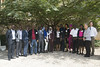
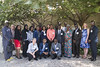
In Ghana, it was obvious to the many people that
we encountered that my nineteen Caucasian colleagues were not indigenous to the
city of Accra or any of the other places that we traveled.
They suffered the escalated bargaining prices, received the
quizzical looks from small children, and faced barriers when interacting with
the people of Accra because they stood out.
But, many of the Ghanaian people didn’t know exactly what to
make of me. At first glance I think my dark skin, long braids and ability to
blend into the crowd deceived them. If only for the few moments before I spoke, I
looked like I belonged.
Though my place within their culture was always fleeting, it
was interesting to see how people would approach me compared to my classmates.
People approached me speaking in their native dialects,
extending hands for handshakes I did not know, and asking for directions to
places I had never been. They would always quickly uncover that I was in fact a
foreigner, and quickly that insider treatment would change to something much more distant. Native Ghanaians called me something that I had never been referred to before—Black American.
Although it made sense that they would not call me ‘African
American’ since I wasn’t born anywhere near their continent of Africa, it still
sounded strange.

I didn’t expect to fit in. We were warned during our
orientation that it would be one of the first times in our lives that we would
feel different from those that surrounded us. But, I didn’t believe that. I was
used to being different my whole life.
Being an African American woman, I understood what it meant
to always feel like a “minority”. I had always assumed that because of my
African American heritage, going to Ghana would be like a symbolic
homecoming where I would discover some lost part of my history. That didn’t
exactly happen. And after arriving in Ghana I had an uncomfortable feeling that despite the fact that I don't physically stand out like my classmates, my place as a Black American came with a lot of stigmas.
After having many conversations with Ghanaian citizens I
found that some held very stereotypical views of the Black American community, and I had to defend questions about those negative ideas.
I think that the media in Ghana has a lot to do with the way African American
people are portrayed to other black and brown people across the diaspora.
Interestingly enough, they felt that American media did not give a fully
accurate representation of Africa.
Sadly it was rarely discussed that some
Ghanaian people knew very little about the African American community outside
of pop culture and negative media coverage. But that is similar to the fact
that American media broadcasts little about Ghana/Africa outside of poverty or
conflict. The lack of a variety of presentation for black men and women as well as the African population perpetuate negative stereotypes for each group. Ideas of the poor and destitute African or the deviant African American stem from the types of images that we are exposed to.
Media and Society play an integral role in how other cultures come to interpret people when they interact. The portrayal of Africans in the media affected how I sought a relationship with the Ghanaian culture, and heightened how different I felt from the people I encountered and how different they thought they were from me.
After traveling to Ghana and returning to America I feel that I have learned so much about myself and about how people relate to each other. I now recognize in a more impactful way that the only way you can truly identify or empathize with another group of people is to admit that the things you knew and the assumptions you made might not have been true. I also learned that the way in which someone identifies is much more complex than the location on their birth certificate and
After traveling to Ghana and returning to America I feel that I have learned so much about myself and about how people relate to each other. I now recognize in a more impactful way that the only way you can truly identify or empathize with another group of people is to admit that the things you knew and the assumptions you made might not have been true. I also learned that the way in which someone identifies is much more complex than the location on their birth certificate and